[external_article]
[source]: Crisis Magazine
[url]: https://crisismagazine.com/opinion/charity-without-illusion-immigration-prudence-and-the-christian-memory
Happy New Year! As we enter 2026, we find ourselves once again confronting questions that refuse to remain theoretical—questions about borders and belonging, compassion and responsibility, charity and political order. Immigration will continue to press itself upon public life, Church teaching, and the Christian conscience, often framed in stark moral absolutes that leave little room for prudence or historical memory.
This image of the Holy Family is frequently invoked in modern immigration debates. It is often presented as the definitive Christian archetype of the refugee family—one that allegedly demands unconditional welcome and the suspension of prudential judgment. Yet this sentimental reading collapses under historical scrutiny.
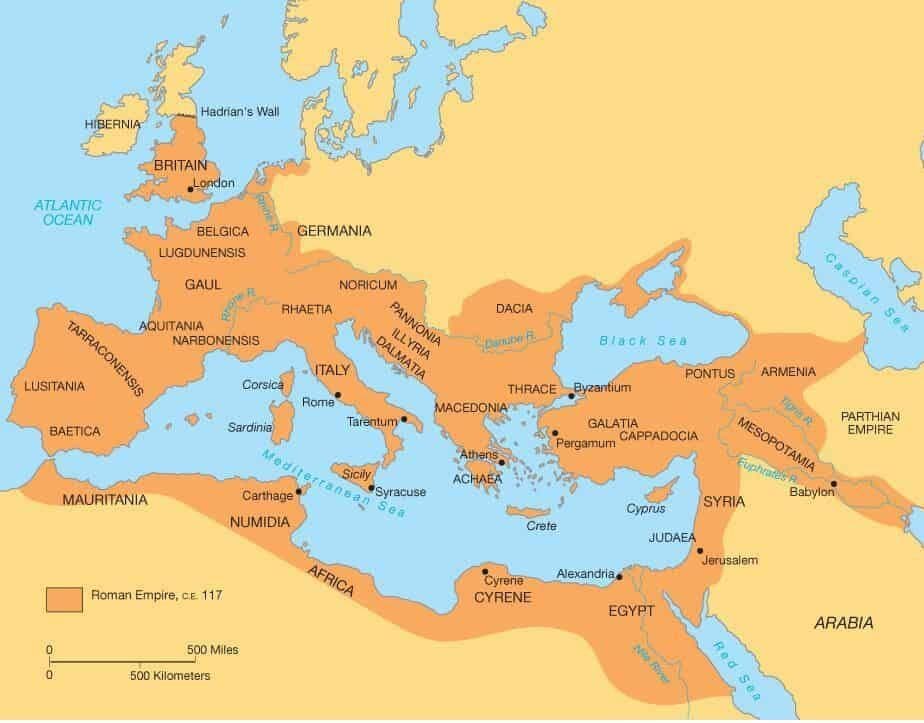
At the time of Christ's birth, Egypt was not a foreign nation-state but a province of the Roman Empire, annexed in 30 B.C. Joseph did not cross into an alien political order governed by unfamiliar laws and customs; he traveled within the same imperial jurisdiction that encompassed Judea. The Holy Family fled a local tyrant—Herod—not a civilization. They did not breach borders, demand accommodations, or seek to refashion Egyptian society. They were displaced persons seeking safety, not symbols for ideological abstraction.
In his 1995 Message for World Migration Day addressing "Undocumented Migrants," John Paul II observed a subtle but consequential shift in public language. Increasingly, societies spoke of immigrants as problems within host nations rather than of emigrants driven from their homelands by war, corruption, economic collapse, or political disorder. This inversion, he warned, conceals root causes while relocating blame.
What is lost in this linguistic shift is moral clarity. An emigrant is a person compelled to leave his home because the conditions necessary for a stable and dignified life no longer exist. When public debate collapses the emigrant into the immigrant, attention is diverted from the injustices that drove displacement in the first place.
John Paul II's warning cuts directly against the imbalance in modern discourse: authentic solidarity does not consist merely in redistributing populations but in confronting and correcting the injustices that produce mass emigration in the first place. To demand limitless reception without demanding reform of the sending nations is not charity; it is a refusal to name responsibility.
John Paul II never endorsed a vision of open borders or moral indifference to political order. He consistently affirmed the inherent dignity of the human person while also upholding the right—and duty—of nations to regulate immigration, safeguard the common good, and require respect for law and culture from those who enter (CCC 2241). Immigrants possess rights, but they also bear responsibilities toward the societies that receive them.
For Augustine, peace is not merely the absence of violence but tranquillitas ordinis—the tranquility of order (The City of God, XIX.13). Political authority exists to sustain a just framework within which truth may be sought, families may flourish, and communities may endure. When order dissolves, charity itself becomes incoherent.
St. Thomas Aquinas sharpens this insight: prudence is right reason applied to action—the virtue that governs how universal principles such as charity and justice are embodied in concrete circumstances. Law must serve the common good rather than sentiment, impulse, or abstraction. Even charity itself follows an ordered logic: we owe particular responsibilities to those nearest us.
From this perspective, a nation may justly regulate its borders, limit inflow, require assimilation, and exclude genuine threats without betraying charity—provided such actions are undertaken without malice and with respect for human dignity.
Today, Christians remain the most persecuted religious group in the world, with a disproportionate share of that persecution occurring in Muslim-majority countries. Recent reports estimate that more than 380 million Christians face high or extreme persecution globally. Informed caution shaped by historical experience is not bigotry; it is prudence.
The Holy Family fled danger but posed none. They sought refuge without demanding cultural capitulation. They lived quietly, without imposing divine law on their hosts. To deploy their story as a rhetorical weapon against legitimate concerns about integration, extremism, or social cohesion is to misuse Scripture itself.
Scripture, John Paul II, Augustine, and Aquinas converge on a demanding but coherent vision. The immigrant is a person bearing inviolable dignity, never a disposable burden. The nation is a moral community, not an open inn. Borders exist to serve justice, not to negate it. Charity detached from truth erodes order; prudence severed from charity hardens into cruelty.
The Christian vocation refuses the false choice between compassion and security. To forget history is to invite naivete. To forget the person is to commit injustice. To forget prudence is to lose both.
The way forward lies neither in utopian universalism nor in defensive alarmism but in societies capable of welcoming the stranger while preserving their own moral and cultural foundations that made genuine hospitality and a chance for a better life possible in the first place.